Xiaomi mobile phone is a new type of smart phone with high cost performance combined with high-tech and modern production mode. It insists on the novel design concept of “Born for You, Burn for Mi”, which is favored by consumers in a short time and quickly captures the market. (Xu C.H., 2016)
Introduction period
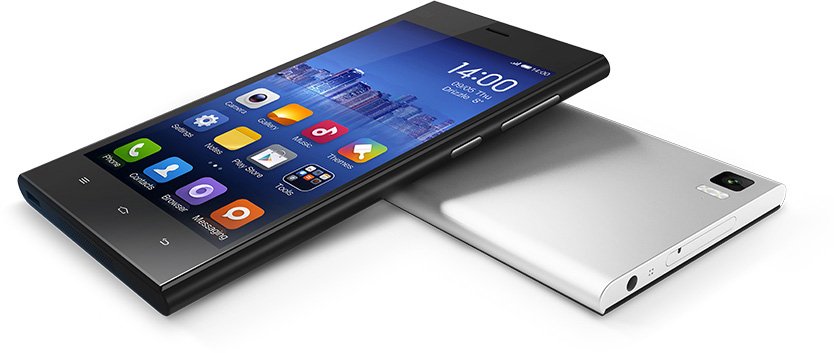
After the end of the Xiaomi mobile phone conference on August 16, 2011, The world’s first new 1.5G dual-core processor, graphite cooling technology, with 1G memory, 4G storage space, up to 2G memory card, the price of only 9 yuan (equal to RM1200) new smart phone came out. However, the technology of the initial millet phone is not mature, there are many problems like dead machine, charging fever, serious battery loss, etc., ranking only tenth in the mobile phone market.
Growth period
Product improvement strategy: After the Mi1 and Mi2 published, Xiaomi enter the growth period. At this stage, Xiaomi Company further improved the function of Xiaomi mobile phone by combining the research of professional team and the feedback of consumers. Among them, the camera function of Xiaomi’s third-generation mobile phone can automatically adjust the shutter when using it, the slowest speed is 2s, and the sensitivity is increased to 3200. During this period, the sales volume of Xiaomi mobile phone in 2013 is 157% more than 2012.
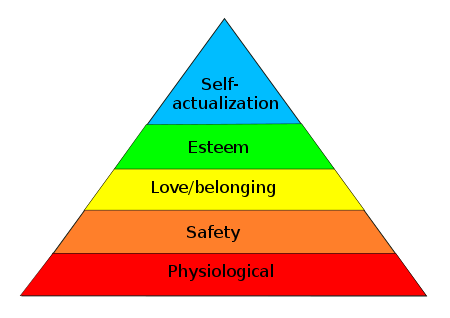
Physiological needs:
At its most basic level, a mobile device needs to be functional. It needs to make and accept calls, maintain a data connection, have a functional screen and input method, etc. (Tompson B., 2013) In October 2013, Xiaomi released Mi3, and won the gimmick with a unique 5.0-inch IPS capacitive screen and a 13-megapixel camera. This is higher than the Apple 5s pixel published in September of the same year, and the screen is bigger.
Safety:
The security center software that comes with Xiaomi mobile phone can judge the security risks of foreign plug-ins, which has greater protection for mobile phone information and financial security.
Social needs:
Xiaomi researchers have succeeded in market positioning, and the MIUI and Android dual-system models developed have been loved by “audiophile”, so they soon have a large number of “MI Fans”.
Self-esteem:
Xiaomi plans to improve after-sales service and establish more Xiaomi home repair stations throughout the country, which has been recognized by consumers and paid attention from the company.
Self-actualization:
Xiaomi is doing much more than surviving, it’s the No. 1 smart phone company in India. Now it wants to soar. (Delhi N., 2018) in the Indian market’s debut, the first week sales reached 10,000 The mobile phone can now reach 10 million units per quarter, and the Indian market accounts for a large portion of sales.
Motivational conflict is a situation that drives consumers to make decisions based on conflicting goals. There are three main types of motivational conflicts: Approach-Approach, Approach-Avoidance, Avoidance-Avoidance. (Byrne R., 2017) Conflict resolution refers to the ability to resist or resolve interference from task-irrelevant distractors in order to focus on The target’ (Botvinick, Braver, Barch, Carter, & Cohen, 2001).
Approach-Approach is In two attractive targets, only one of them can be selected due to conditional restrictions. (Motivational conflicts, n.d) For example, when you are hesitant to buy a Xiaomi phone and a Samsung phone. When the dual-function system MIUI of Xiaomi mobile phone and Android are compared with the curved screen design of Samsung mobile phone, as a consumer, the versatility of Xiaomi is a better choice.
Approach-Avoidance: When it comes to the dual meaning of being beneficial and disadvantageous to an object, it tends to favor the beneficial side and avoid the disadvantaged party. (Motivational conflicts, n.d) For example, when you are hesitating to find two mobile phones, Xiaomi and Huawei, Xiaomi is cheap, hard and cost-effective; Huawei is more expensive, the style is better, but the fuselage is relatively fragile. In contrast, the cost-effective Xiaomi may be worth starting.
Avoidance-Avoidance: there are two threatening targets that make them evade motivation for the two goals, but one must choose one. (Motivational conflicts, n.d) For example, when the Xiaomi mobile phone is updated, the depreciation is particularly fast; the Apple mobile phone is updated and the depreciation is faster. Xiaomi mobile phone won again.
Task2:
In product development, many organisations struggle to create a value proposition that can overcome the headwinds of technology change and regulatory requirements, while satisfying the longer term goals of sustainability. (Daniel SK&Badurdeen F.& Jawahir IS, 2018)There is a need to Understand the ways that customers respond to the changing marketplace from international and multicultural perspectives. (Taylor and Francis, 2010) From the customer’s point of view, the millet system is not sound after-sales service is a larger problem. At first, Xiaomi mobile phone only had the service station of Xiaomi Home in the city center of each city. Other Xiaomi mobile phone users who are not in the city center can only repair the mobile phone by means of express delivery. In the same industry, there are only 33 mobile phone service centers in Beijing, and there are more than ten customer service centers in Huawei. Improving after-sales service has become the biggest challenge. The millet company, which is in the growth period, has continuously improved and enhanced its business and service systems. Of course, the customer service system is second to none.
So in February 2013, Li, the president of Xiaomi Mobile MIUI mobile phone system project, revealed that Xiaomi will be in China New Year and has fixed more than 30 city repair centers. It plans to introduce more than 600 third-party repair centers covering 120 city. And will invest 400 to 500 million yuan to establish more than 30 millet home repair stations across the country. The addition and improvement of Xiaomi’s home has enhanced the credibility of Xiaomi, enabling Xiaomi to not only have more loyal old customers, but also attract more new customers.

Viral marketing is an existing business strategy that promotes products through social networks. It is like a virus, spread from one person to another, and is enhanced by word of mouth or the Internet’s network effect: Let them consume new flavors. Lay’s launched a “Do us a a flavour” activity that collects the taste of chips. If selected, it will have the chance to win a $1 million prize. In 2012, the event attracted a large number of food enthusiasts to collect 4 million flavors of ideas through Facebook and SMS channels. When people buy branded items, they want to boost their self esteem especially if the brand is aligned to a famous celebrity or is associated with the elite in society. People often chose to buy brands which they perceive to meet their expectations (safety and self esteem ) or avoid them. (Maslow, A. 1954)
For consumers, activities have two meanings: one is to let them feel their own views attract the attention of the company – this can enable consumers to gain recognition from the corporate side, but also make them aware of the importance and Respect; the second is to let consumers participate in product development and make their own thoughts—which constitutes consumers’ perceived demand for self-realization, that is, to exert their potential. Through this event, the number of fans of Legacy’s official Facebook has increased by 3 times, and the company’s sales have increased by 12%. Snack is a food industry, and it is an indispensable part of human growth. Good snacks bring people a happy mood or a way of decompression, and they have a high-position in physiological needs.
Motivational conflict is a situation that drives consumers to make decisions based on conflicting goals. There are three main types of motivational conflict marketers should be aware of, defined as; Approach-Approach, Approach-Avoidance, Avoidance-Avoidance.
Approach-Approach: Fitness Fairy Meadow has launched a special offer: the longer the fitness card, the cheaper it is. The gym can achieve both weight loss and a strong body. But for people who are overweight, the goal of losing weight in the gym is more attractive.
Approach-Avoidance: The advantage of a person who is overweight in the Fitness Fairy Meadow is that it can achieve weight loss, but the downside is that it costs more than walking. But more equipment in the gym can bring more benefits.
Avoidance-Avoidanc:The fitness industry has two negative conflicts for obese people: spending money to buy services; there are many fitness equipment and facilities that can’t be used in gym training. Because aversive and appetitive motivational systems inform reactions to consequential interactions, they may be especially relevant to experiences of complaint avoidance. (Worley, T.R. & Aloia, L.S. 2018
Reference list:
Thompson, B. Mobile’s Hierarchy of Needs, Stratechery.com, Articles, assessed on April 9,2013
<https://stratechery.com/2013/mobiles-hierarchy-of-needs/>
Xu C.H., The Product Life Cycle and Marketing Strategy of Xiaomi Mobile Phone, Doc88.com,Economic Forum, Gen.551 No.06, assessed on June, 2016.
<http://www.doc88.com/p-9428928570722.html>
Byrne R., Motivational conflict and Examples of ways markets can resolve this conflict, WordPress blog, Posted on May 5, 2017
Botvinick, M. M., Braver, T. S., Barch, D. M., Carter, C. S. & Cohen, J. D, 2001. Conflict monitoring and cognitive control. Psychological Review, 108, pp624–652
Motivational conflicts, n.d., Baidu Encyclopedia, General article, Para 2, review on May 6, 2019
<https://baike.baidu.com/item/%E5%8A%A8%E6%9C%BA%E5%86%B2%E7%AA%81/4693685>
Springer Nature(2018), International Journal of Life Cycle Assessment, Environmental Science, Issue7, Pages 1351-1526, ISSN:1743-5110
Taylor and Francis (2010), “Multicultural perspectives in customer behaviour”, Journal of Marketing Management, Business, Vol.26, Nos.11-12, Page 993-1004, ISSN: 0267-257X
Inderscience (2018), “Inthernational Journal of Product Lifecycle Management” (IJPLM), Business ,Vol.11, No. 1, ISSN:1743-5110
Maslow, A. (1954). Motivation and Personality, New York: Harper. pp. 236. ISBN: 6041-9873.
Worley, T.R.&Aloia, L.S. (2018), “Motivations for Complaint Avoidance: The Role of Motivational Systems and Conflict Expectations”, Western Journal of Communication, Publisher: Taylor&Francis, Volue 82, Issue 5, ISSN:1057-0314�

 Leslie‘s Web